

Posted by James Crowley on 5/14/2026 to
LED Corn Light Bulb News
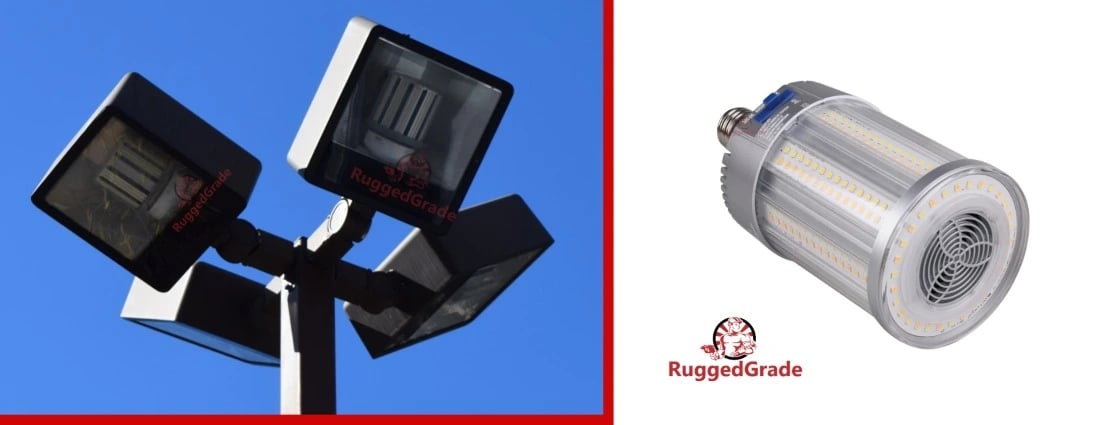
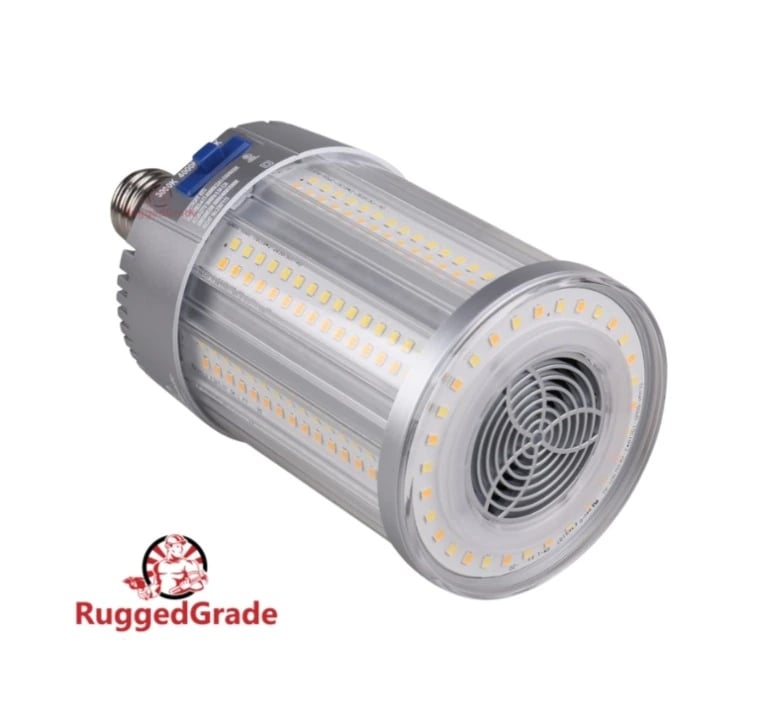
A light corn bulb is one of the most common LED retrofit options for older HID, metal halide, and high-pressure sodium fixtures. It gets its name from its shape. The bulb has rows of LED chips arranged around a cylindrical body, giving it a “corn cob” look. This design helps spread light in multiple directions, making it useful in fixtures originally built for omnidirectional HID lamps.
For many commercial and industrial upgrades, LED corn light bulbs are popular because they often fit into existing fixtures. That means property owners may not need to replace the full fixture housing. In many cases, the old ballast is removed or bypassed, and the LED lamp is wired directly, depending on the product design and manufacturer's instructions.
But before choosing a bulb, the base matters. The two most common options are E26 and E39. Picking the wrong one can lead to poor fitment, unsafe installation, heat issues, or reduced bulb life.
What Is a Light Corn Bulb?
A light corn bulb is an LED lamp with LED chips arranged around its sides. Many also include LEDs on the top to spread light outward and downward. This makes them a practical replacement for older HID lamps that send light in many directions inside a fixture.
Corn-style LEDs are commonly used to replace:
- Metal halide lamps
- High-pressure sodium lamps
- Mercury vapor lamps
- Some CFL retrofit lamps
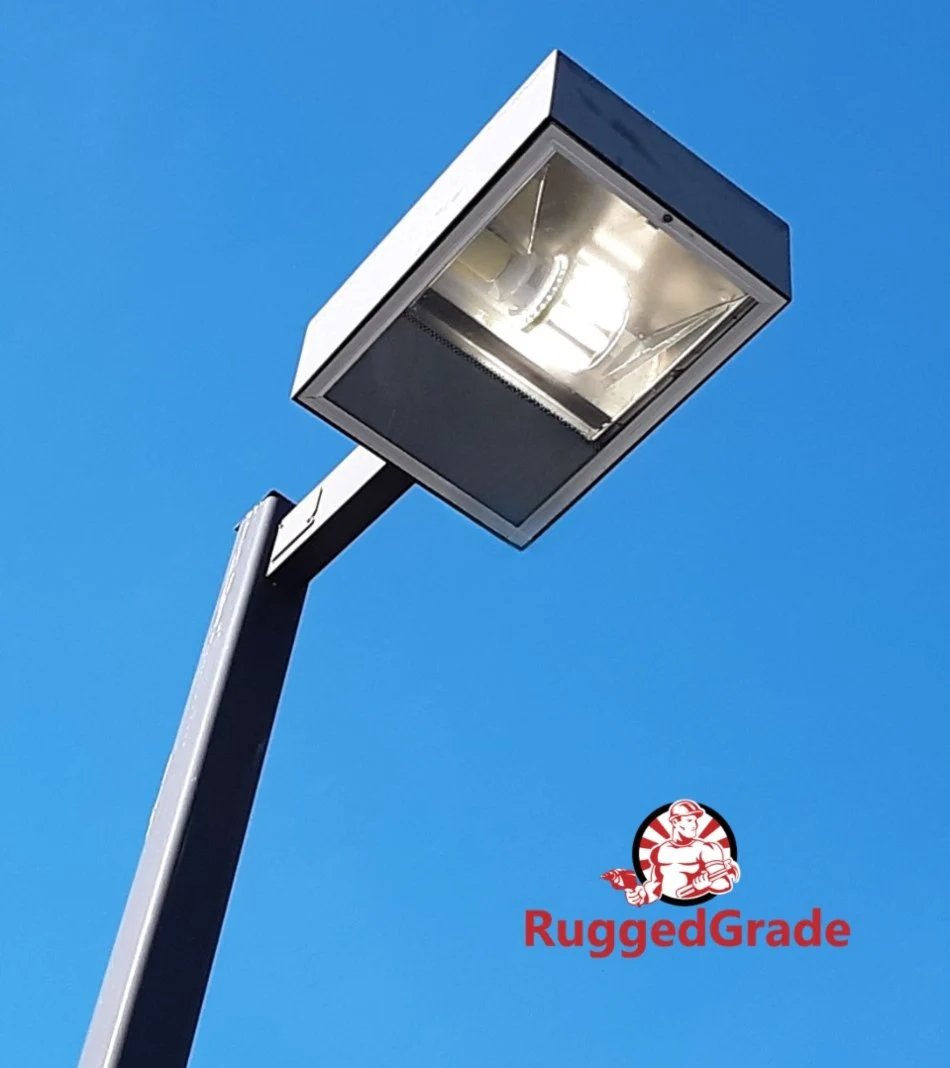
They are often used in wall packs, post-top fixtures, high bays, parking lot lights, garage lights, barn lights, and street lighting fixtures.
Benefits of LED Corn Bulbs
LED corn bulbs offer several clear advantages over older HID lighting:
Energy Savings
LED corn bulbs use less electricity than traditional HID lamps while producing strong light output. Some LED corn bulbs are designed to replace much higher-wattage HID or metal halide lamps, helping reduce operating costs over time.
High Lumen Output
A good LED corn light bulb can produce bright, wide-area illumination. This makes it useful for warehouses, parking lots, loading areas, workshops, and outdoor security lighting.
Long Lifespan
LEDs typically last longer than HID lamps and require less frequent replacement. This matters most in fixtures mounted high on poles, ceilings, or exterior walls, where maintenance takes more time and equipment.
Easy Retrofit Installation
Many corn bulbs are designed for retrofit projects. Instead of replacing the entire fixture, the installer may be able to remove the old lamp and ballast, then install the LED lamp in the existing housing. Always follow the product’s wiring instructions and local electrical codes.
“The right corn bulb is not just about brightness. The base, socket, heat, and fixture space all decide how well the lamp performs over time.”
Why Base Size Matters in Light Corn Bulbs
The base is the metal screw section that connects the bulb to the socket. For corn bulbs, E26 and E39 are the most common base types.
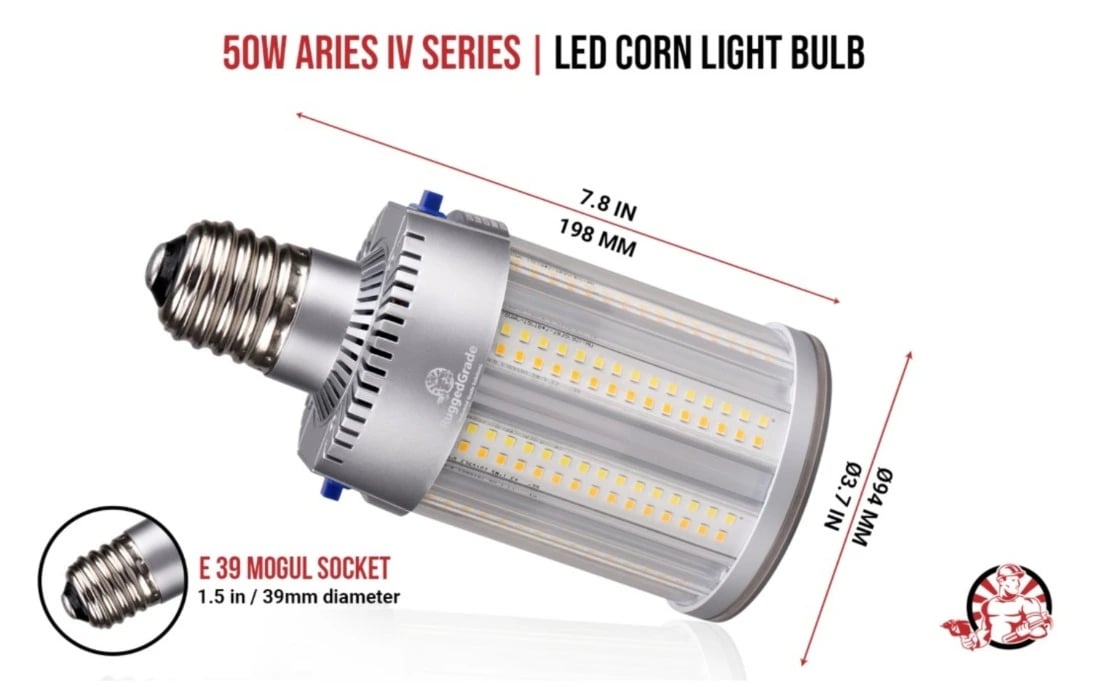
The “E” stands for Edison screw. The number refers to the base diameter in millimeters. E26 is about 26 mm wide. E39 is about 39 mm wide.
That size difference matters for several reasons.
Electrical Compatibility
The bulb must match the socket and voltage requirements of the fixture. Some LED corn bulbs support a wide voltage range, but the socket, wiring, and fixture still need to be checked before installation.
Mechanical Support
Higher-wattage corn bulbs are often larger and heavier. An E39 mogul socket provides a larger connection point, which is better suited for bigger commercial and industrial lamps.
Fixture Fitment
Corn bulbs need enough room inside the fixture. A bulb that is too tall, too wide, or too heavy for the housing may not sit correctly. This can affect light distribution, airflow, and service life.
Heat and Airflow
LEDs produce less heat than HID lamps, but they still generate heat at the driver and heat sink. Corn bulbs need space around them so heat can move away from the lamp. A tight or fully enclosed fixture can trap heat unless the bulb is rated for that use.
Understanding E26 and E39 Bases
What Is an E26 Base?
An E26 base is the standard medium screw base used in many residential and light commercial fixtures. An E26 corn bulb is usually used in smaller applications where the fixture does not need the output of a larger industrial lamp.
Common uses include:
- Garages
- Small shops
- Barns
- Utility rooms
- Residential exterior fixtures
- Low-output commercial fixtures
An E26 LED corn bulb is often available at lower wattages than an E39 model. This makes it a good fit for smaller fixtures, but it also imposes limits. If the space needs high lumen output, an E26 socket may not be the right choice.
Heat also matters. Some E26 fixtures are enclosed or have limited airflow. Before installing an LED corn bulb, check that the bulb is rated for enclosed fixtures if the housing does not allow airflow.
What Is an E39 Base?
An E39 base is a mogul screw base. It is larger than E26 and is common in commercial and industrial HID fixtures. E39 sockets are often found in high-output applications that previously used metal halide or high-pressure sodium lamps.
An E39 LED corn bulb is commonly used in:
- Warehouses
- Factories
- Parking lot lights
- Street lights
- Post-top fixtures
- Large outdoor security lights
- High bay fixtures
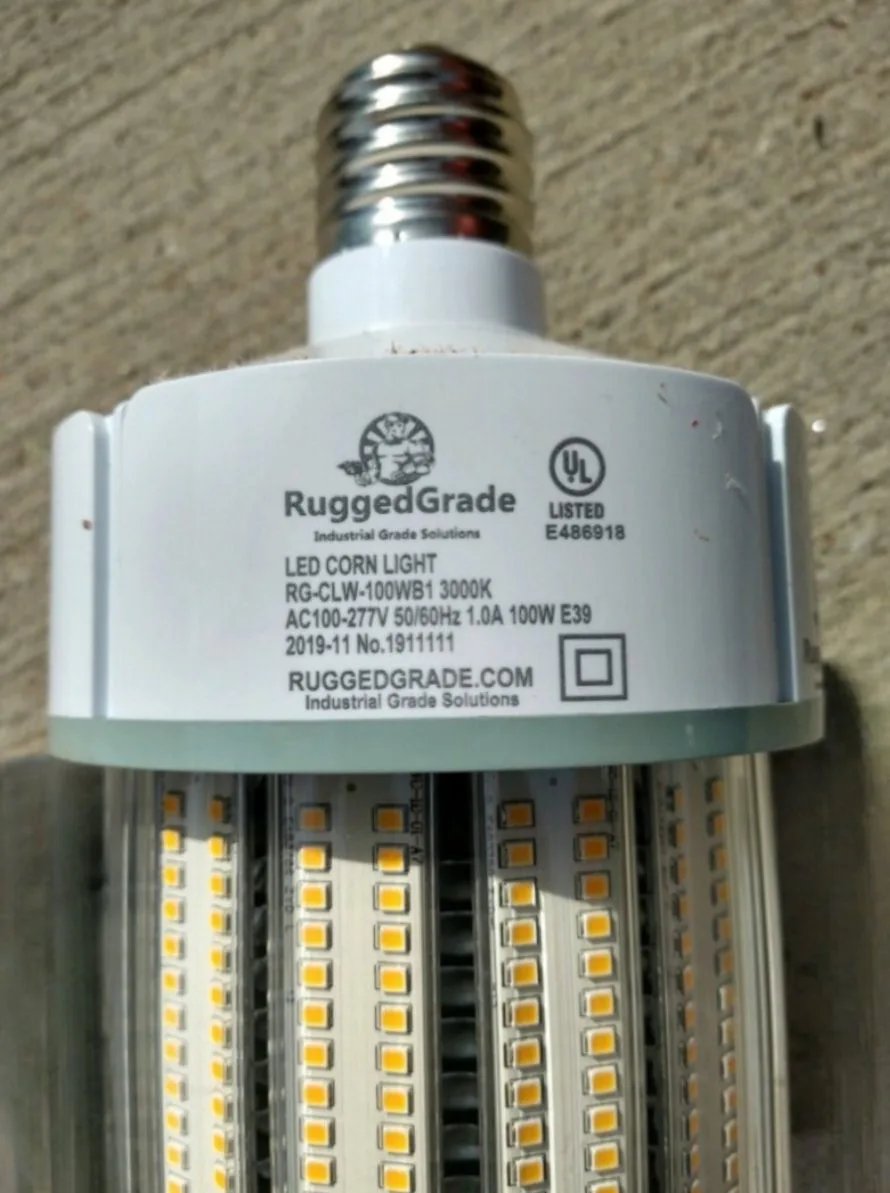
An LED corn bulb E39 setup is usually better for higher-wattage lamps and higher lumen output. The larger base and socket are better suited for bigger bulbs used in demanding spaces.
E39 bulbs are also a better choice for fixtures that need wider coverage, stronger output, and better thermal handling. That does not mean every E39 bulb works in every fixture. The fixture size, socket condition, voltage, ballast setup, and heat rating still need to be checked.
Choosing the Right Light Corn Bulb for Your Application
Residential and Small Commercial Spaces
E26 bases make sense for smaller areas where the fixture already has a medium screw socket. An E26 corn bulb can work well in garages, workshops, storage rooms, and smaller exterior fixtures.
Choose E26 if:
- The existing socket is E26
- The fixture has enough room for the bulb
- The wattage and lumen output match the space
- The bulb is rated for the fixture type
Warehouses and Industrial Facilities
E39 is often preferred for industrial spaces because these areas usually need more light. Warehouses, production areas, and large shops often have higher ceilings and wider floor areas. An E39 LED corn bulb can provide the output needed for these spaces, especially in fixtures that were built for HID lamps.
Parking Lot and Outdoor Fixtures
Outdoor fixtures need more than brightness. They also need durability, proper heat control, and the right fit. Parking lot lights and street lights often use E39 mogul sockets because they were designed for higher-output HID lamps.
For outdoor use, check:
- Fixture size
- Socket type
- Voltage
- Wet-location rating
- Enclosed-fixture rating
- Ballast bypass requirements
- Color temperature
- Beam spread
FAQs Light Corn Bulbs
What is the difference between E26 and E39 corn bulbs?
E26 is a medium screw base with a 26 mm diameter. E39 is a mogul screw base with a 39 mm diameter. E26 is common in residential and light commercial fixtures. E39 is common in commercial, industrial, and outdoor HID fixtures.
Can I use an adapter between E26 and E39?
Adapters exist, but they should be used carefully. An adapter does not change the fixture’s wiring, heat limits, voltage rating, or mechanical support. For high-wattage corn bulbs, it is usually better to use the correct socket and fixture instead of relying on an adapter.
Are E39 corn bulbs brighter than E26?
Usually, yes. E39 corn bulbs are often made for higher wattage and higher lumen output. But brightness depends on the specific bulb, not the base alone. Always compare lumens, wattage, beam angle, and fixture compatibility.
Do corn bulbs work in enclosed fixtures?
Some do, but not all. Many LED corn bulbs need airflow to manage heat. If the fixture is enclosed, use a bulb specifically rated for enclosed fixtures. Using the wrong bulb in a tight housing can shorten lamp life.
Conclusion
E26 and E39 corn bulbs are not interchangeable in a practical sense. The base size affects fit, support, heat management, and fixture compatibility.
Use an E26 LED corn bulb for smaller fixtures with medium screw sockets and moderate light output needs. Use an E39 LED corn bulb for larger commercial, industrial, and outdoor fixtures that need higher lumen output and stronger performance.
Before buying, check the socket, voltage, fixture space, ballast requirements, and enclosed-fixture rating. The right base helps the LED corn bulb fit correctly, run cooler, and last longer.
About the Author: About James Crowley on X.
About us: See our About us page for more about RuggedGrade
