
.webp)
Posted by James Crowley on 6/18/2026 to
LED warehouse lights
Warehouse lighting is easy to overlook until it starts costing money.
Poor visibility can slow workers down, increase mistakes, raise safety risks, and drive up energy use. In a large facility, those issues add up fast.
That is why many warehouses rely on industrial led high bay lighting. These fixtures are built for high ceilings, wide aisles, storage racks, and active work areas. The right lighting helps employees see clearly, move safely, and complete tasks with fewer delays.
Why Warehouse Lighting Matters More Than You Think
Warehouses operate differently than offices and retail spaces. An office needs comfortable lighting for desks and computers. A retail space needs lighting that helps products look appealing. A warehouse needs lighting that supports movement, accuracy, equipment operation, and safety.
That means the lighting has to work across a much larger and more active space.
High ceilings create one of the biggest challenges. The higher the fixture is mounted, the farther light has to travel before it reaches the floor, shelves, products, and work areas. If the fixture is not designed for that height, the space may have dim aisles, harsh shadows, glare, or uneven light.
Visibility matters in nearly every warehouse task. Workers need to read labels, scan barcodes, identify products, check inventory, inspect pallets, and operate forklifts. If lighting is poor, those tasks take longer and become more prone to error.
Bad lighting can affect day-to-day performance in small ways that add up. A picker may take extra time finding the right item. A packer may need to double-check labels. A forklift operator may have less visibility near rack ends or loading areas.
“A warehouse can have the best equipment in the building, but if workers cannot see clearly, the operation is already working at a disadvantage.”
Good lighting helps the entire facility function better.
What Are Industrial High Bay Lights?
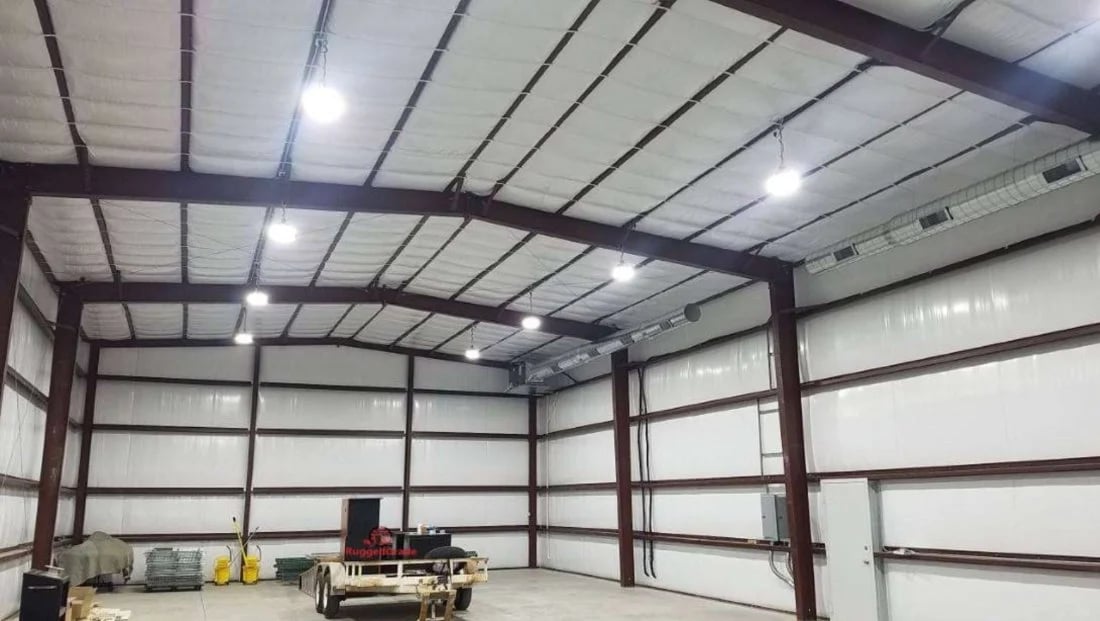
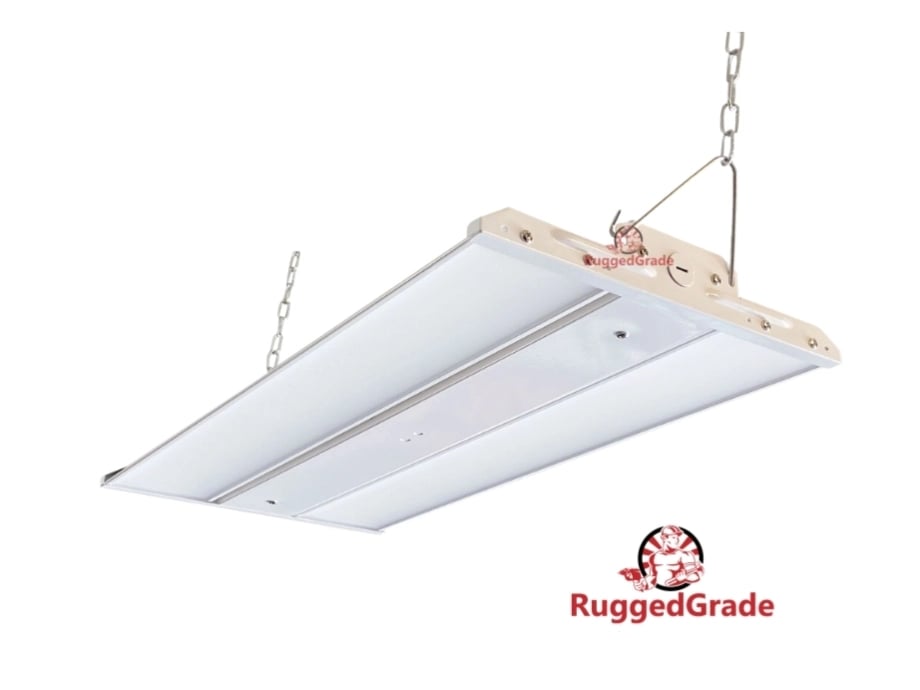
Industrial high bay lights are fixtures designed for large spaces with high ceilings. They are commonly used in warehouses, distribution centers, manufacturing plants, workshops, gymnasiums, and other commercial or industrial buildings.
High bay fixtures are typically used in areas with ceilings around 20 feet or higher. In many warehouses, they may be mounted much higher depending on the building design and storage layout.
Common high bay technologies include LED, metal halide, high pressure sodium, and fluorescent systems. Older metal halide and fluorescent fixtures were common in warehouses for many years, but they come with drawbacks. They often use more energy, require more maintenance, and lose light output as they age.
Modern led high bay lights are now widely used because they can provide strong light output with lower wattage. They also turn on instantly, work well with controls, and offer better light distribution than many older systems.
For warehouse environments, high bays are preferred because they are built to push usable light down from tall mounting heights. They can help light open floor areas, storage aisles, packing zones, loading docks, and production spaces.
The goal is not simply to make the room brighter. The goal is to put the right amount of light where people need it to work safely and accurately.
The Hidden Cost #1: Workplace Accidents and Safety Risks
Poor Visibility Creates Hazards
Poor visibility creates real safety concerns in a warehouse.
Forklifts, pallet jacks, carts, racks, workers, and stacked products often share the same space. If lighting is dim or uneven, it becomes harder to see obstacles, people, and equipment in time to react.
Common lighting-related hazards include:
- Forklift and pedestrian collision risks
- Missed trip hazards in aisles
- Poor visibility around rack ends
- Shadows near loading docks
- Hard-to-see spills or debris
- Reduced visibility in storage areas
A dark aisle or shadowy corner may not seem serious until someone gets hurt. Workers moving quickly through the facility rely on clear sightlines. Forklift operators need to see pedestrians, pallets, floor markings, and rack positions. Pickers and packers need to see labels and product details without straining.
Lighting also affects how quickly employees notice hazards. A pallet left in the wrong area, a damaged box, or a loose stretch wrap tail may be easy to miss in poor lighting.
OSHA and Workplace Safety Considerations
Workplace lighting also connects to safety requirements. OSHA includes illumination standards for certain work areas, including storage areas, corridors, ramps, and shops. Warehouses need enough light for workers to perform their tasks safely.
The exact lighting needs depend on the facility. A loading dock may need different illumination than a bulk storage aisle. A quality control area may need more task lighting than a low-traffic storage zone.
Industrial high bay fixtures help meet these needs by providing consistent overhead lighting across large spaces. When placed and selected correctly, they reduce dark spots and improve visibility throughout the warehouse.
.webp)
The Hidden Cost #2: Reduced Employee Productivity
Poor lighting slows work down.
Warehouse productivity depends on speed and accuracy. Products need to move through receiving, storage, picking, packing, and shipping without constant delays.
If employees struggle to read labels, barcodes, aisle signs, or inventory information, every task takes longer. Workers may need to stop, move closer, rescan items, or ask someone else to confirm a product number.
That may only take a few extra seconds per task. Across hundreds or thousands of picks per week, those seconds become lost time.
Poor lighting can affect productivity by causing:
- Slower picking
- Packing delays
- More inventory errors
- More label-reading mistakes
- Extra product checks
- More worker fatigue
Lighting also affects comfort. Dim, flickering, or uneven lighting makes employees work harder visually. Over a long shift, that can lead to eye strain and fatigue. Tired workers may move slower and make more mistakes.
Better led warehouse lights help create a more usable work environment. Employees can see what they are doing without fighting shadows, glare, or weak illumination. That supports better throughput and fewer avoidable delays.
.webp)
The Hidden Cost #3: Excessive Energy Consumption
Older Lighting Technologies Drive Up Utility Bills
Older warehouse lighting systems can use a lot of energy.
Metal halide fixtures, high pressure sodium lamps, and older fluorescent systems often require higher wattage than modern LED fixtures. In a warehouse with long operating hours, that energy use can become a major monthly expense.
Another problem is light depreciation. Older lamps can lose brightness over time while still using the same amount of power. That means the facility pays the same utility cost but receives less usable light.
Maintenance also adds cost. Replacing lamps in high ceilings takes time, labour, lifts, and planning. In busy facilities, maintenance work may interrupt normal operations or require after-hours scheduling.
How Industrial High Bays Reduce Operating Costs
Industrial led high bay lighting can reduce operating costs in several ways.
First, LED fixtures can produce strong light output with lower wattage. This helps reduce electricity use without leaving the warehouse underlit.
Second, LED fixtures often have better efficacy, which means they produce more lumens per watt than many older lighting systems.
Third, LEDs provide more controlled light distribution. Instead of wasting light in directions where it is not useful, high bay fixtures can direct light down into aisles, work zones, and open floor areas.
LEDs also last longer than many traditional lamp types. That can reduce maintenance costs and limit the need for frequent lamp replacement.
For larger warehouses, these savings can be significant. Even a small reduction per fixture matters when a facility has dozens or hundreds of high bays running for long shifts.
How Industrial High Bays Improve Warehouse Operations
Better Visibility
Industrial high bays improve visibility across the warehouse.
Workers can read labels, scan barcodes, identify products, and spot hazards more easily. Better visibility supports picking accuracy, inventory control, and faster movement through the facility.
In warehouses with tall racks, good fixture placement can also help reduce shadowing in aisles. That makes storage areas easier to navigate and inspect.
Enhanced Safety
Better lighting helps workers see equipment, pedestrians, floor markings, obstacles, and rack positions. This can reduce accident potential, especially in areas where forklifts and people work near each other.
Clear visibility is especially important near loading docks, aisle intersections, staging areas, and rack ends.
Lower Operating Costs
LED high bays can lower operating costs through energy savings and reduced maintenance.
Lower wattage helps reduce utility bills. Longer fixture life helps cut down on replacement work. Lighting controls can add more savings by dimming or switching lights based on occupancy, daylight, or facility schedules.
Consistent Light Quality
A good high bay layout provides uniform illumination throughout the warehouse.
That matters because inconsistent light can slow workers down. Moving from a bright area into a dim aisle forces employees to adjust visually. It can also make some areas feel less safe or less functional.
Consistent light quality helps the space feel cleaner, safer, and easier to work in.
.webp)
Signs Your Warehouse Lighting Needs an Upgrade
Warehouse lighting problems often build slowly. A system may decline over time without anyone noticing how much visibility has changed.
Here are common signs that your lighting may need an upgrade.
Frequent Lamp Failures
If lamps, tubes, or ballasts need regular replacement, the system may be costing too much to maintain. This is especially true in high ceiling spaces where every repair takes extra equipment and labour.
High Utility Bills
If your warehouse still uses older metal halide or fluorescent high bays, lighting may be using more power than needed. Switching to led high bay lights can help reduce energy use.
Dark Aisles and Inconsistent Illumination
Dark aisles, shadowy corners, and uneven light levels are signs that the current system is not doing enough. The issue may be fixture spacing, aging lamps, poor distribution, or the wrong fixture type.
Employee Complaints About Visibility
Workers know where the problems are. If employees mention dim areas, glare, flickering, or trouble reading labels, the lighting should be reviewed.
Difficulty Meeting Productivity Goals
If workers are losing time during picking, packing, receiving, or inventory checks, lighting may be part of the problem. Poor visibility can create delays and errors that affect the whole operation.
Conclusion
Bad warehouse lighting can create safety risks, slow employees down, increase errors, and raise utility costs.
Industrial high bays are designed for large spaces with tall ceilings, active work areas, and heavy equipment traffic. Modern led warehouse lights help improve visibility, reduce energy use, and lower maintenance demands.
For warehouses still using outdated fixtures, upgrading to industrial led high bay lighting can make the building safer, easier to work in, and less expensive to operate.
About the Author: About James Crowley on X.
About us: See our About us page for more about RuggedGrade
