
Posted by James Crowley on 9/17/2026 to
Poorly lit areas can develop around almost any property, even when its entrances and parking areas appear bright. A recessed doorway, building corner, loading dock, or narrow strip beside a wall may fall beyond existing fixtures. These gaps create security dark zones where people, obstacles, and activity are harder to see after sunset.
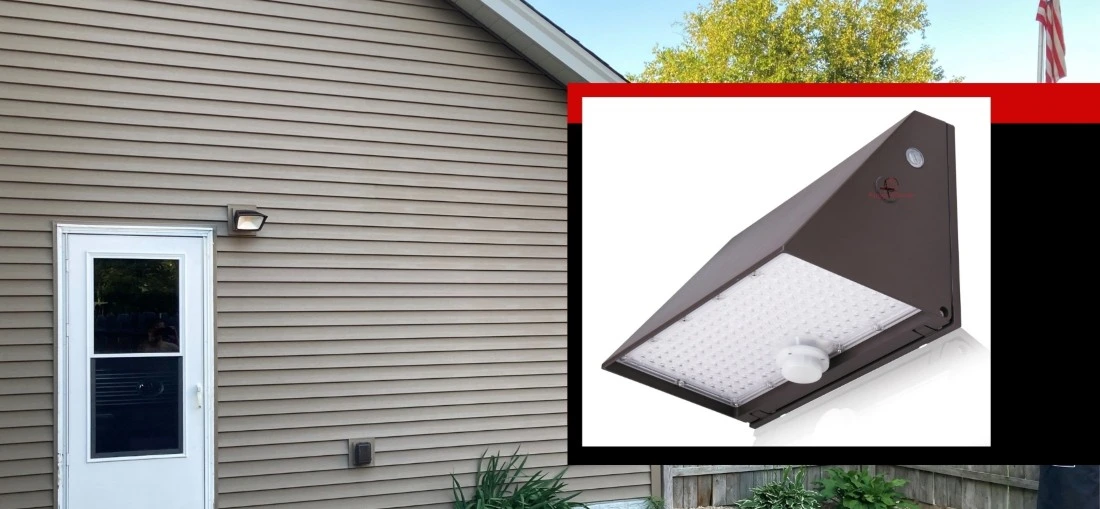
Adding Motion Sensor Wall Lights in the right locations can improve visibility without keeping every fixture at full output all night. Good results depend on more than brightness. Placement, mounting height, beam spread, sensor direction, and nearby obstructions all affect performance.
What Are Motion Sensor Wall Lights?
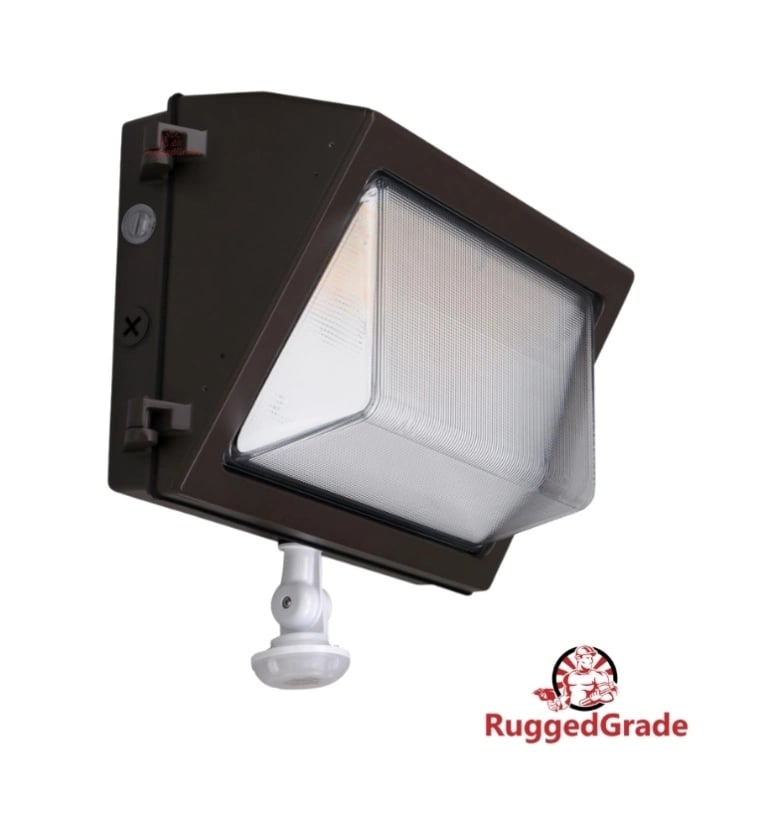
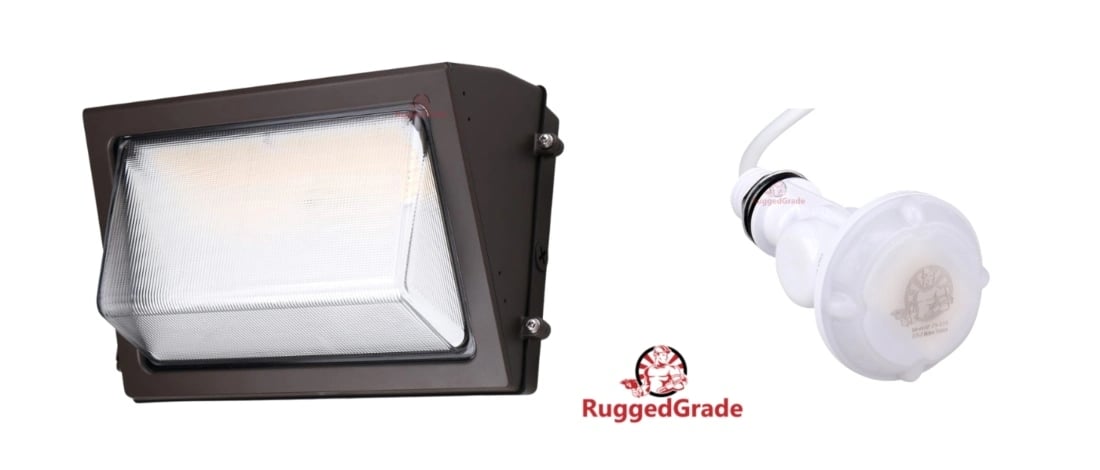
Motion sensor wall lights are wall-mounted fixtures equipped with a sensor that detects activity within a defined coverage area. Many models use passive infrared technology, which responds as people or warm objects move across detection zones. Other products may use microwave sensing or combined technologies.
When motion is detected, the fixture turns on or increases to a higher light level for a programmed period. Sensitivity, detection range, shutoff delay, and operating mode vary by product.
The main types of exterior wall lighting operate differently:
- Standard wall lights are controlled by a switch, timer, or lighting control system. They remain on according to that control rather than responding directly to movement.
- Dusk-to-dawn wall packs use a photocell to detect ambient light. They turn on after daylight fades and turn off when daylight returns.
- Motion sensor wall lights activate or change output after detecting movement within the sensor’s coverage pattern.
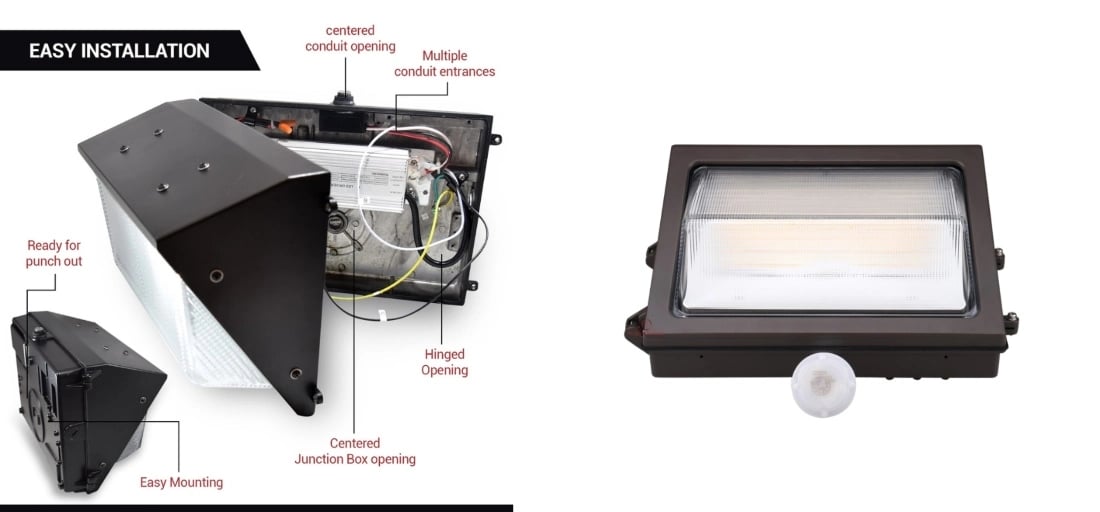
Some fixtures combine a photocell and motion sensor. The photocell prevents daytime operation, while the motion sensor controls output after dark. The light may stay off until movement occurs or remain at a lower standby level before rising to full output.
LED technology is well suited to this type of control because LEDs provide instant light and can be switched or dimmed without a warmup period. The U.S. Department of Energy also identifies long service life, energy efficiency, optical control, and compatibility with sensors as major advantages of LED technology.
Whether a listing uses motion sensor outdoor wall light or motion sensor wall light outdoor, the fixture must be rated for its environment. Exterior products may need a wet-location rating, corrosion-resistant construction, and sealed electrical connections.
Why Security Dark Zones Are a Problem
A security dark zone is an area where insufficient or poorly directed light limits visibility. It may be fully dark or simply much dimmer than the space around it. Strong contrast can also create a problem. Eyes and cameras adjusted to a bright doorway or parking lot may have difficulty capturing detail in an adjacent shadow.
These zones can leave entrances, steps, and locks difficult to see. They can hide activity near exterior walls, reduce visibility at loading areas, and make nighttime monitoring less effective. Uneven light may also conceal curbs, debris, and changes in elevation that contribute to trips and falls.
More fixtures are not automatically the answer. Excess light can cause glare, spill onto neighboring properties, waste electricity, and create harsh contrast. A better approach identifies the precise gap, then selects a fixture distribution, output, location, and control strategy that fills it.
“Effective security lighting is not about making every surface brighter. It is about placing controlled light where visibility breaks down.”
Where Should Motion Sensor Wall Lights Be Installed?
Building Entrances and Exit Doors
Main entrances and employee doors need enough light for people to recognize faces, locate locks, and see steps or uneven pavement. Motion activation suits a doorway that receives occasional nighttime traffic and does not require continuous full-output lighting.
The sensor should detect a person before the door is reached. Light should cover the doorway and approach without shining directly into people’s eyes or nearby cameras.
Side Doors and Emergency Exits
Side doors and emergency exits often fall outside the primary lighting pattern. Overhangs, vegetation, and building projections can make the problem worse. A fixture above or beside the door can fill shadows but must not obstruct exit signage, hardware, or required clearance.
Rear and less visible doors deserve a nighttime inspection. An exit that appears properly lit during the day may become difficult to see once nearby businesses and interior lights shut down.
Loading Docks and Service Areas
Loading docks are strong candidates for motion activation because use may be intermittent. Fixtures can provide immediate light as employees, drivers, forklifts, or vehicles enter. Coverage should include dock edges, stairs, doors, controls, and work surfaces without producing glare for drivers.
Mounting height and distribution matter in these large spaces. A low fixture may create bright spots and shadows behind equipment. One placed too high may provide too little task light or miss movement. Photometric planning and manufacturer sensor data can guide the layout.
Building Corners and Blind Spots
Exterior corners interrupt wall-pack coverage. A fixture aimed along one wall may leave the adjoining side dark. Lights near each side of the corner can create overlapping coverage and remove the gap.
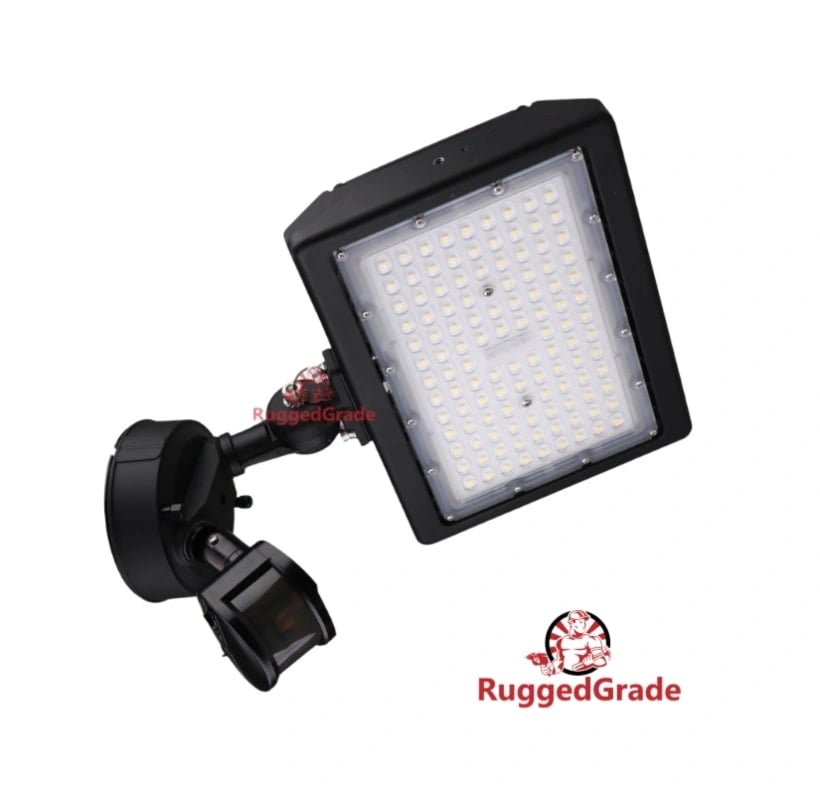
Multiple fixtures need compatible beam patterns to fill shadows without overlighting the corner or sending light beyond the property. Outdoor motion sensor wall lights with adjustable heads may help where architecture creates an unusual angle, provided they remain properly aimed.
Sidewalks and Building Perimeters
Walkways beside commercial buildings can form dark strips between wall and parking lot lighting. Wall-mounted fixtures can brighten these paths and reveal curbs, ramps, doors, and objects near the building.
Spacing should reflect fixture output, mounting height, beam angle, wall finish, and desired light levels. Excessive spacing creates alternating bright and dark patches. Overlapping coverage creates a more consistent path. Sensors should face the direction of approach rather than wait to detect someone beneath the fixture.
Trash and Dumpster Areas
Dumpster enclosures are often far from main entrances, while walls, fences, and landscaping may block nearby pole lights. Motion activation provides light when residents, employees, maintenance crews, or collection workers enter without requiring full output all night.
This approach suits businesses, apartments, warehouses, and schools. Enclosure walls and open gates should not block the sensor or cast large shadows across the work area.
Storage and Utility Areas
Exterior storage, utility doors, and mechanical service areas may receive little traffic. Motion Sensor Wall Lights can illuminate access panels, paths, gates, and work zones when authorized personnel approach.
Nearby roads, blowing vegetation, and equipment may cause unwanted activation. Careful aiming and programming help restrict detection to the intended area.
Parking Lot Edges and Areas Near Buildings
Parking lot lights cover broad areas but may not reach the space beside a building. Canopies, parked vehicles, and landscaping can create perimeter shadows.
A motion sensor outdoor wall light can fill these gaps while LED parking lot lights cover drive lanes and larger parking areas. Coordinating both systems provides more complete coverage without asking one high-output fixture to perform every job.
How High Should Motion Sensor Wall Lights Be Mounted?
There is no single mounting height that works for every property. The correct height depends on the fixture’s light distribution, sensor specifications, lumen output, building design, and intended use. Manufacturer instructions often define the mounting range and sensor orientation needed for reliable detection.
A higher position may spread light across a larger area and protect the fixture from accidental contact, but it can also weaken useful illumination at ground level or change the detection pattern. A lower position may improve access and near-wall coverage while increasing glare, tampering risk, and bright spots.
The final position must balance detection range, light distribution, service access, and visual comfort. An important note is that sensors should not point toward moving tree branches, public roads, reflective surfaces, exhaust vents, or other sources of repeated unwanted activation. A nighttime commissioning visit allows sensitivity, timing, aiming, and light levels to be checked under real conditions.
Why LED Motion Sensor Wall Lights Are a Smart Security Upgrade
LED fixtures use less electricity than many older lighting technologies for comparable useful output, and their long rated life can reduce lamp replacement work. Their instant response also makes them a practical match for motion controls. There is no delay while the source warms up after activity is detected.
Automatic operation places light where and when it is needed. Instead of keeping low-traffic areas fully illuminated all night, a property can use off, dimmed, or scheduled modes according to the capabilities of the fixture and control system. This may reduce unnecessary nighttime energy use while preserving visibility during activity.
Targeted lighting can also help cameras capture useful detail, make hazards easier to spot, and call attention to movement near vulnerable areas. Lighting alone cannot guarantee security or prevent crime, but it can support a broader plan that includes locks, access control, cameras, landscaping, and property maintenance.
Conclusion
Security dark zones often remain close to the building, just outside the reach of entrance lights and parking lot poles. Entrances, side doors, loading docks, corners, perimeter walks, dumpster enclosures, utility areas, and parking lot edges should all be evaluated after dark.
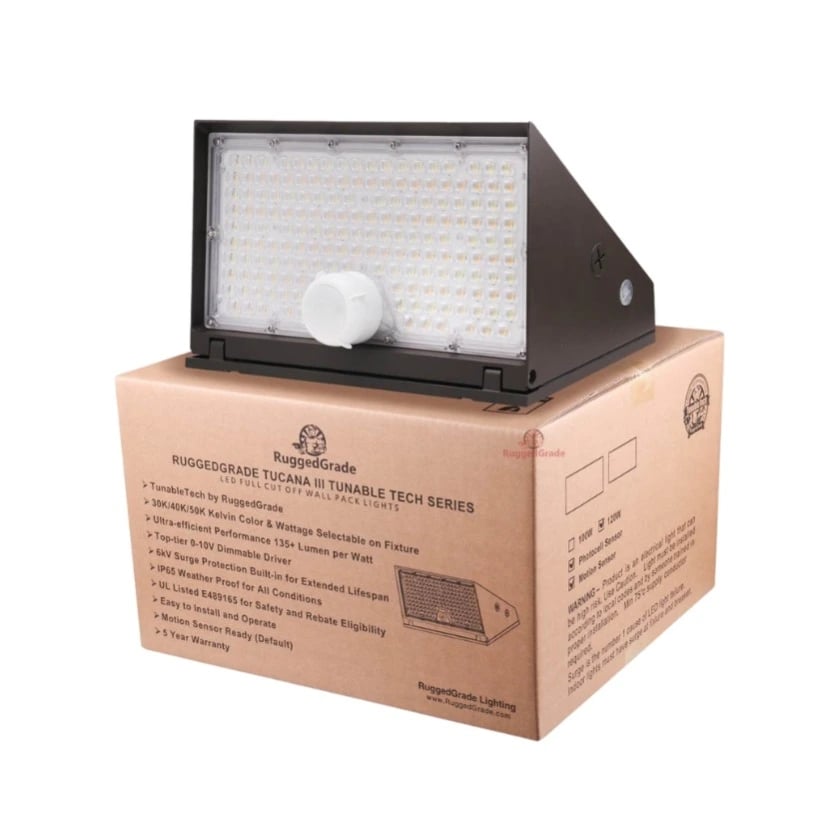
The best results come from placing Motion Sensor Wall Lights according to actual site conditions rather than simply adding more brightness. Correct fixture selection, controlled beam distribution, suitable mounting height, accurate sensor aiming, and overlapping coverage can improve visibility while limiting glare and wasted light. A planned layout turns overlooked shadows into usable, visible spaces whenever activity occurs.
About the Author: About James Crowley on X.
About us: See our About us page for more about RuggedGrade
