
Posted by James Crowley on 7/16/2026 to
LED news
Commercial properties rarely become completely inactive after business hours. Employees may leave late, delivery drivers arrive before sunrise, security teams patrol overnight, and valuable equipment remains on-site around the clock. Without dependable exterior lighting, these normal activities become harder and potentially more dangerous.
This is one reason more businesses are adopting solar-powered security lighting. Modern solar flood lights combine photovoltaic panels, battery storage, efficient LEDs, and automatic controls in one practical system. They can illuminate areas that would otherwise require extensive electrical work, including fence lines, remote entrances, storage yards, construction zones, and agricultural properties.
Unlike traditional lighting systems, solar-powered flood lights do not depend on utility electricity during everyday operation. They collect energy during daylight hours, store it in a rechargeable battery, and use that stored power after dark. This gives businesses another way to strengthen perimeter security while controlling installation and operating costs.
Why Perimeter Lighting Is Essential for Commercial Security
A dark perimeter creates opportunities for unauthorized activity. Someone approaching a building, gate, storage area, or equipment yard is less likely to be noticed if there is not enough light to clearly see the surroundings.
Bright, well-positioned lighting can make trespassers feel more visible. Although lighting cannot prevent every security incident, it removes many of the dark areas that people may use to approach a property without being seen. It also helps security personnel identify unusual movement before a person reaches a building or restricted area.
Perimeter lighting is equally important for employees and visitors. People walking through parking areas, loading zones, sidewalks, and entrances need to see curbs, pavement changes, debris, equipment, and other possible hazards. OSHA guidance recommends additional lighting in dim areas such as parking lots and locations around dumpsters as part of workplace security planning.
Lighting also supports surveillance systems. Security cameras generally produce more useful footage when the area being monitored has adequate, consistent illumination. A camera may detect motion in a dark area, but identifying faces, clothing, vehicles, or license plates can be difficult when the scene is poorly lit.
Better visibility may also help businesses reduce liability concerns. Illuminating walkways, parking areas, stairs, and entrances gives employees and guests a clearer view of their surroundings. It also demonstrates that the property owner has taken practical steps to address nighttime conditions.
“A secure perimeter starts by making sure people, vehicles, and hazards cannot disappear into the darkness.”
What Are Solar Flood Lights?
Solar floodlights are outdoor fixtures that provide broad illumination using energy from sunlight. They are often installed on walls, poles, fences, building exteriors, or freestanding mounts.
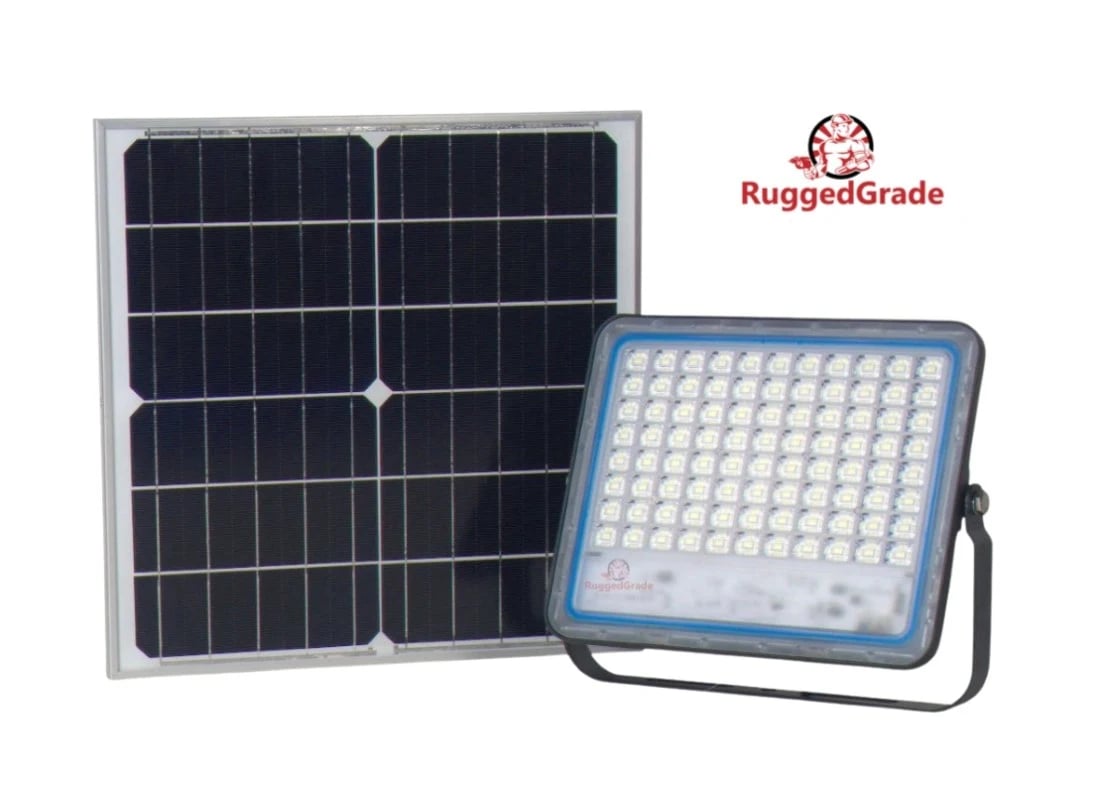
During the day, photovoltaic cells inside the solar panel absorb sunlight and convert it into electrical energy. That energy charges a battery connected to the lighting system. After sunset, the stored energy powers the LED fixture. The U.S. Department of Energy describes the same basic process in which photovoltaic cells absorb solar energy and generate electricity.
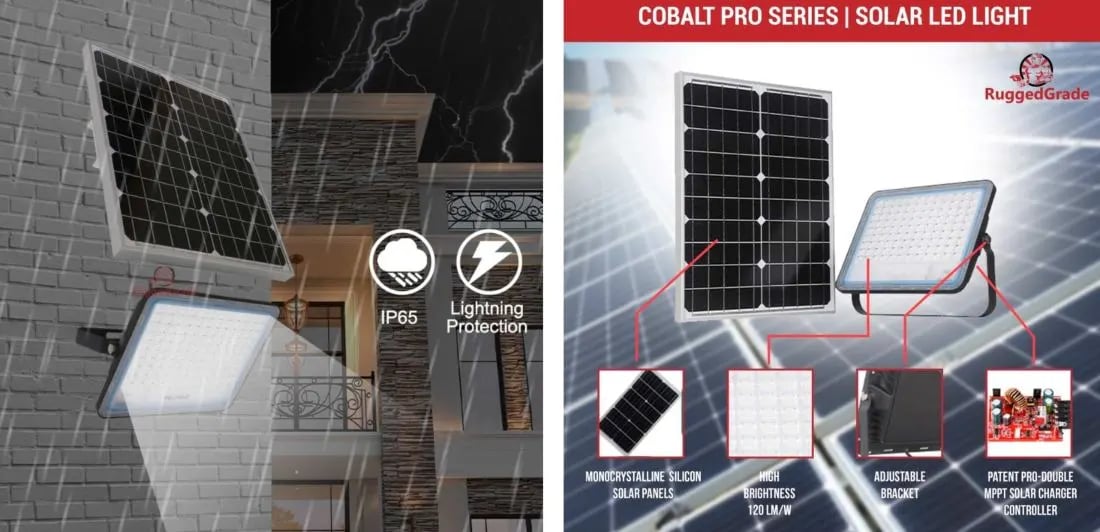
A commercial solar flood light usually includes several main components:
Solar Panel
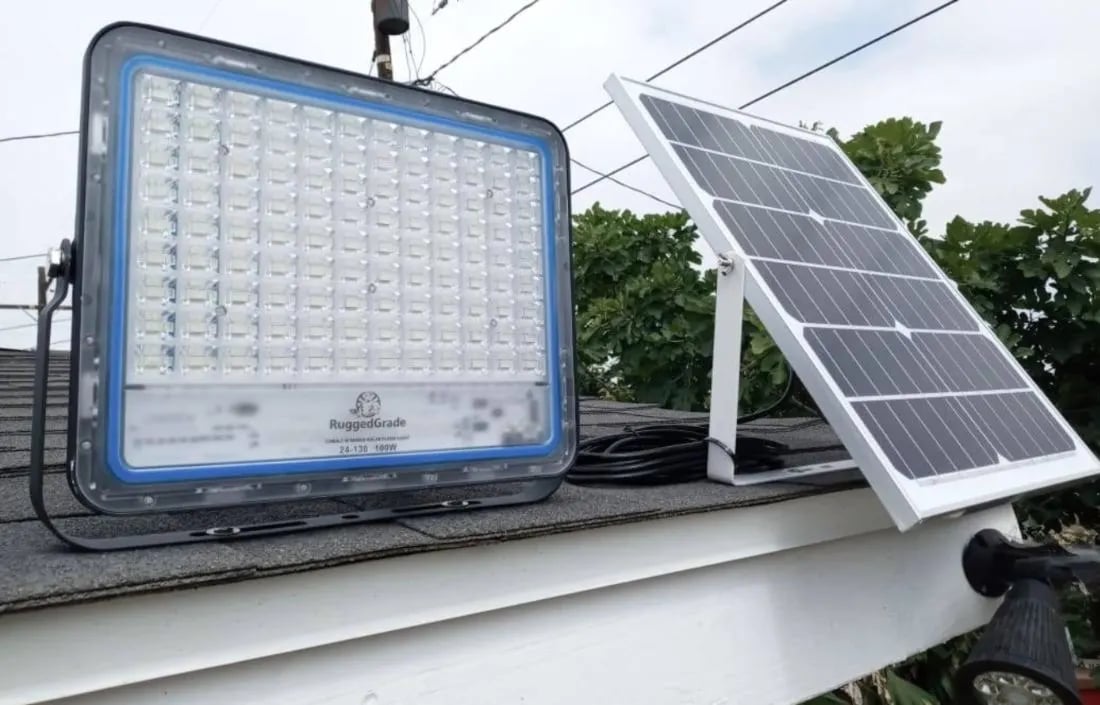
The solar panel collects sunlight and converts it into usable electricity. Its size and placement affect how much energy the system can generate. A panel mounted in heavy shade or facing the wrong direction may not collect enough energy for dependable overnight performance.
Rechargeable Battery
The battery stores the electricity generated during the day. After dark, it supplies power to the light. Battery chemistry, capacity, temperature range, and charging conditions all influence how long the fixture can operate each night.
LED Light Source
LEDs convert stored electricity into visible light. They are well suited for solar applications because they produce high light output while consuming less energy than older lighting technologies. ENERGY STAR reports that LED products can produce light up to 90 percent more efficiently than incandescent bulbs.
Smart Controller
The controller manages charging, discharging, operating schedules, brightness levels, and battery protection. Depending on the fixture, it may also control dimming or motion-activated lighting modes.
Motion Sensor
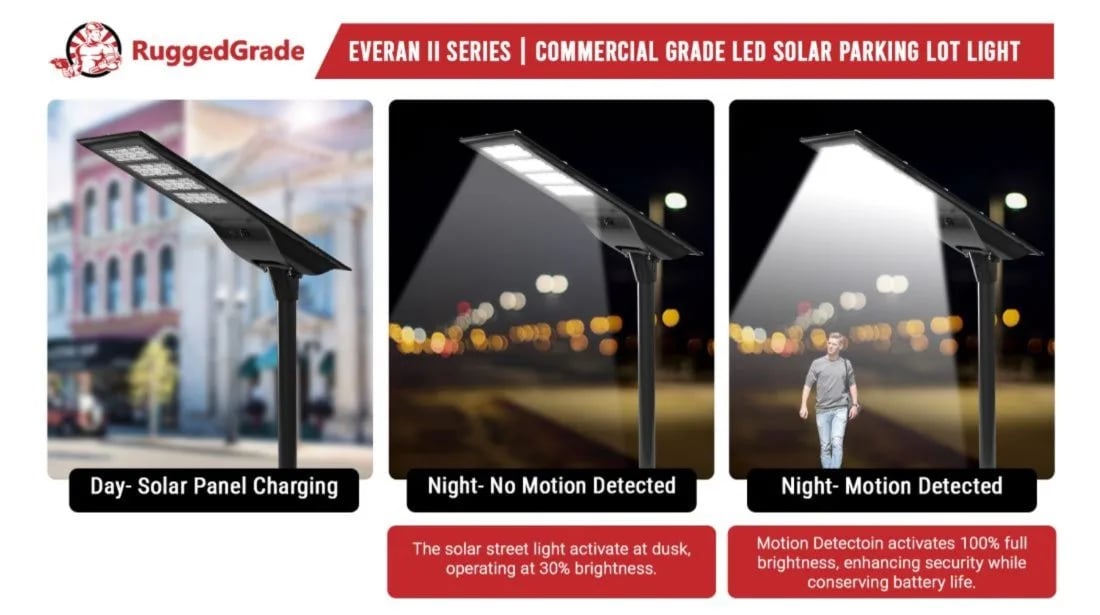
Some solar LED flood lights include a motion sensor that detects activity within a set area. The fixture may remain at a lower brightness during quiet periods and increase to full output when movement is detected.
Traditional wired flood lights receive electricity through a building or utility circuit. Installing them may require trenching, conduit, electrical permits, wiring, and access to the power grid. Solar models operate independently, which makes them particularly useful in remote areas or locations where electrical infrastructure would be difficult or expensive to extend.
Benefits of Solar Flood Lights for Businesses
Lower Operating Costs
One of the most attractive benefits is the lack of daily electricity consumption from the utility grid. After installation, sunlight supplies the energy needed for normal operation.
This can reduce the amount of electricity purchased for exterior lighting. The savings will depend on the number of fixtures, their wattage, operating schedule, local electricity rates, and the system being replaced.
Maintenance requirements may also be lower than those of older outdoor lighting systems. LEDs have long operating lives, and there are no utility lines running to a stand-alone solar fixture. Businesses still need to clean panels, inspect mounting hardware, and replace batteries eventually, but regular lamp replacement and electrical repairs may be reduced.
Reliable Security Lighting
Many commercial solar flood lights operate automatically from dusk to dawn. A photocell or controller senses changing daylight levels and turns the fixture on after sunset. It then turns the light off when daylight returns.
Automatic operation means employees do not need to manually activate the lighting each evening. It also reduces the chance that someone will forget to turn on a critical perimeter fixture.
Because the light draws power from its own battery, it may continue operating during a utility outage. This can be useful when grid-connected exterior lights, building lights, and other electrical systems are temporarily unavailable. Actual backup performance depends on the battery charge, system design, weather, and selected operating mode.
Sustainable Lighting Solution
Solar lighting uses a renewable energy source for everyday operation. By reducing electricity drawn from conventional power generation, it can help lower the operational carbon footprint associated with exterior lighting.
For companies with sustainability goals, solar-powered flood lights provide a visible example of renewable energy use. They can support broader efforts involving energy conservation, responsible facility management, and reduced dependence on grid electricity.
Applications for Commercial Solar Flood Lights
- Office buildings can use solar fixtures around side entrances, sidewalks, parking areas, landscaping, and property boundaries. These lights can improve visibility for employees arriving early or leaving after dark.
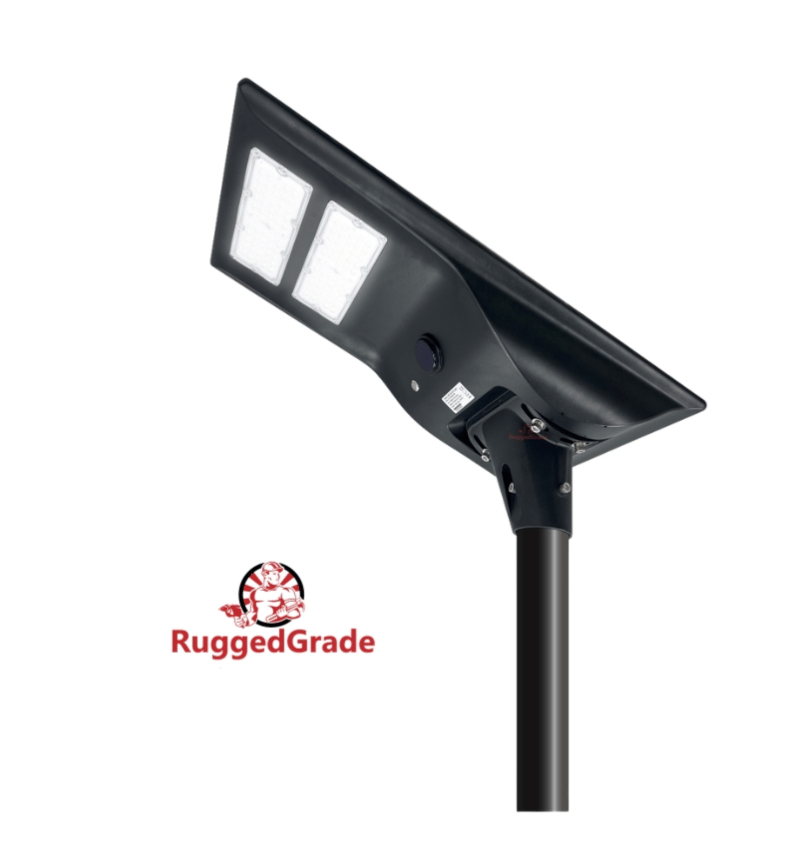
- Parking lots may use pole-mounted fixtures to illuminate driving lanes, pedestrian routes, street lights and sections located far from the main building.
- Manufacturing facilities can install lights around loading docks, equipment yards, fences, access gates, and material storage areas. These locations often remain active outside standard office hours.
- Schools and campuses may use solar lighting near walkways, athletic areas, maintenance buildings, bus zones, and remote parking sections.
- Storage facilities can illuminate rows of units, entry gates, perimeter fencing, and areas not located near an electrical connection.
- Construction sites are another strong application. OSHA requires construction areas, ramps, corridors, offices, shops, and storage areas to meet applicable minimum illumination levels. Solar fixtures can provide supplemental lighting without requiring permanent wiring at a temporary worksite.
- Farms and agricultural properties can use them near barns, gates, machinery, livestock areas, access roads, and distant property boundaries.
How Solar Flood Lights Provide 24/7 Perimeter Safety
The phrase “24/7 perimeter safety” does not mean that the light shines continuously during daylight. It means the system supports round-the-clock property protection by charging during the day and providing illumination when darkness creates the greatest visibility concerns.
Dusk-to-Dawn Operation
Automatic controls activate the fixture around sunset without requiring manual input. Depending on the system, the light may remain at a steady output throughout the night or follow a programmed dimming schedule.
Continuous overnight illumination helps keep entrances, gates, walkways, and property boundaries visible during the hours when buildings are often least occupied.
Motion Sensor Technology
Motion sensing can increase brightness when a person or vehicle enters the detection area. This sudden change in light can draw attention to movement and make an intruder feel exposed.
It can also conserve stored energy. Instead of operating at full output all night, the fixture may use a lower setting during inactive periods. The saved energy can extend operating time, particularly during long nights or stretches of cloudy weather.
Motion sensors should be aimed carefully. Poor placement can cause unwanted activation from traffic, animals, moving branches, or activity outside the intended security zone.
Battery Storage for Overnight Performance
The solar panel charges the battery whenever sufficient sunlight is available. After sunset, the battery powers the fixture according to its programmed schedule.
Battery capacity is one of the most important factors in overnight performance. A system must store enough energy to support the selected brightness and operating time. Businesses should also consider local winter conditions, average sun exposure, temperature, and the number of cloudy days the fixture is expected to handle.
A light that works well during a sunny summer week may perform differently during short winter days. For dependable commercial use, the panel, battery, fixture output, and operating profile should be properly matched to the location.
How to Maximize the Lifespan of Solar Flood Lights
- Keep solar panels clean so dust, pollen, leaves, bird droppings, and other debris do not reduce sunlight exposure. Cleaning frequency will depend on the environment.
- Inspect poles, brackets, bolts, and wall mounts regularly. Outdoor fixtures are exposed to wind, rain, vibration, and temperature changes, which can loosen hardware over time.
- Replace batteries according to the manufacturer’s recommendations or when runtime begins to decline noticeably. Batteries are wear components and do not last indefinitely.
- Trim branches and remove new obstructions that shade the panel. Landscaping, new structures, signs, and stored materials can block sunlight even if the original installation location was clear.
- Seasonal maintenance checks are also helpful. Review panel orientation, fixture aim, motion sensor coverage, battery performance, seals, and operating schedules before winter or periods of severe weather.
Conclusion
Modern solar floodlights offer businesses a flexible way to illuminate property boundaries, entrances, parking areas, equipment yards, and other security-sensitive locations. By combining solar generation, battery storage, LED efficiency, and automatic controls, these systems can operate without relying on utility power during normal use.
The right fixture can help discourage unauthorized access, improve visibility, support security cameras, and make exterior areas safer for employees and visitors. Solar LED flood lights are especially useful where wiring is unavailable, trenching would be disruptive, or businesses want to reduce recurring electricity costs.
Successful results depend on proper product selection and placement. Panel exposure, battery capacity, light output, mounting height, weather conditions, and operating mode must all be considered. With a correctly sized system and routine maintenance, solar-powered floodlights can become a dependable part of a commercial perimeter safety plan.
About the Author: About James Crowley on X.
About us: See our About us page for more about RuggedGrade
