
Posted by Rachel on 4/19/2020 to
LED Parking Lot Lights
LED Parking Lot Lights- Why are they the way to go?
(Blog updated - 07/12/2023)
When it comes to illumination, some of the areas that gives property owners a headache includes parking lot lights. It is due to the need for the illumination system to accommodate both vehicular and pedestrian traffic, endure harsh operating environments, address public safety concerns, and observe lighting quality issues. All with out costing a ton to operate.
Another dilemma that faces the business proprietors is getting sufficient light illuminating the entire parking lot. Insufficient lighting in the parking creates shadowy areas and dark spots, which potentially encourages criminal elements. For the customers, employees, and other visitors, such parking lots feel unsafe and insecure. Additionally, it makes you prone to litigation for accidents arising from poorly lit areas in the parking lot. While upgrading and replacing your existing parking lot lights may sound like an expensive affair, you cannot afford not to look at your options. With installation done more than a few decades ago, the conventional parking light systems are costly to run, utilize inefficient lights, and have short durability. It is the reason you need to turn your attention to the LED parking lot lights.
What are the LED lights?
While most parking lots use high-intensity discharge (HID) lighting, the popularity and demand for light-emitting diode (LED) lighting are rising exponentially. It is no surprise since even with some business proprietors considering the replacement costly, the ROI offered by the latter will expeditiously offset any replacement costs. A look into the benefits of the LED lighting system in the parking lots will corroborate the statement. But first, let us get an insight into the LED lights' anatomy. Its anatomy utilizes solid-state technology for the conversion of electricity into light. Ideally, the LED models have minute "bulbs" that act as semiconductors built-into an electrical circuit. When you turn on the module making the electric power pass through the semiconductors, it leads to the emission of light photons illuminating the fixture. Unlike the HIDs that demand fitting with large reflectors for the redirection of light output, the LEDs provide a uniform spread of illumination. Overall, the latter is more efficient with an immediate visual difference as well as a long-term cost-difference of utility.
Why change to LED lights?
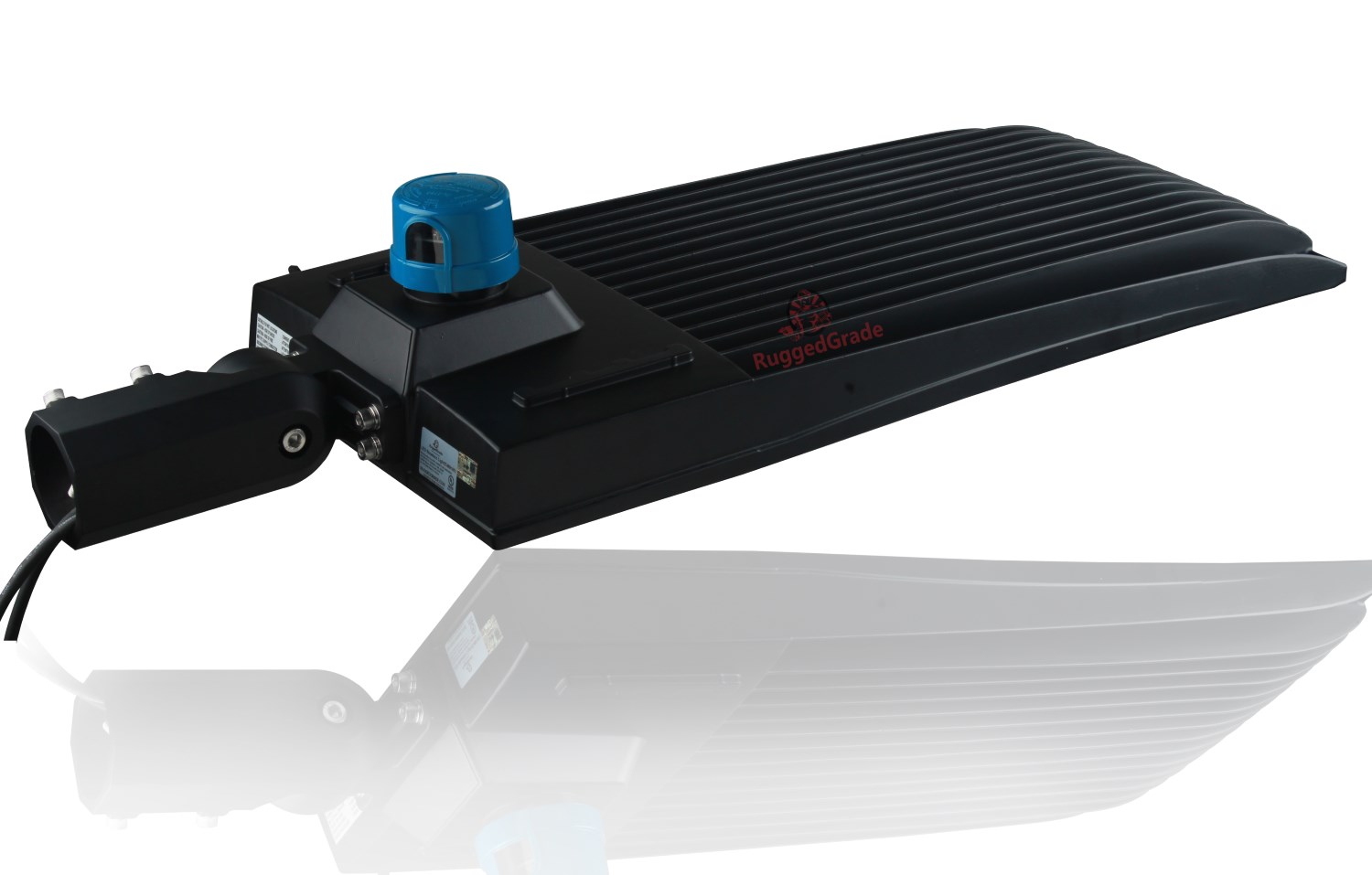
Of particular interest around LED the parking lot lighting system. It can get expensive, keeping the parking lot lit throughout the night more so at those periods of the year when there are short daylight hours and prolonged nights. New LED floodlights with dusk to dawn sensors might be the way to go.
Conventionally, the go-to choice for parking lots and other sizeable zones lighting system has been HID lights. Given their unpleasing light production and the need for a prolonged time for warm-up before full illumination, they have not always been the perfect solution. While the installation of the HID lights has lower upfront expenses, ballast replacement and regular re-lamping counteract the gains made from the installation expenses. LEDs, however, even with an initial higher investment, provide a drastic ROI due to their nearly zero maintenance expenses. Combined with the reduced cost of the LED products and the rapid technological advancements, companies are now shifting their attention to modern LEDs. To better comprehend the superiority of LED lights in the parking lots, consider the following benefits.

Energy Costs Savings
Compared to other forms of parking lots lighting systems such as incandescent lamps or halogen, HID is more energy efficient; however, LEDs are even miles ahead of HIDs in energy efficiency as they utilize up to 75% less energy while producing light of high quality. For an average HID light, the average watt range from 400 to 1000 while LED parking lot lights have an average wattage of 65 to 400 watts. Eventually, the LED lights saves you thousands of dollars in utility bills. Further energy savings with LED lights is realized with the use of lighting controls that fit impeccably into the LED fixtures. Also, while LED lights turn on instantly without any flickering, the HID lights need some time to warm-up before total illumination. LEDs lights are capable of producing omnidirectional, focused light with almost 100% of the light exiting the fixture while the HIDs have some light remaining in the fixture. LEDs therefore produce light uniformity and enhanced light distribution. You are, therefore, able to use few lights in your fixed space which maximize the spacing of the poles further enhancing the energy savings.
Increased efficiency with controls
Besides the LED lights technology delivering lighting of high-quality with major energy-savings, one of its most significant benefits is its dimmable capabilities. Usually, the fixtures contain a 0-10 dimmable driver that gives it this feature. Additionally, in-built are adjustable Passive Infrared Motion/Photo sensors with the capability of perceiving motion and adjust the output of light accordingly. When motion or image detection stops, the time delays maintains the lights in the same mode for a moment before getting back to the low mode. The luminaire is then turned off entirely after running in low mode for a default period. The photocell control instructs the luminaries to switch on and off depending on the ambient light at that moment. With all these potential options, there is an integrated sensors control that successfully prevents the LED pole lights from illuminating an empty parking lot unnecessarily at full brightness. It adds to the energy-saving capability of the LED lights and their prevention of light pollution.
Low maintenance costs
While you have utility-bills saving with the use of LED lights, the most substantial savings are realized in the incredibly low maintenance costs. HID lamps are fragile with ballasts, filaments, glass bulbs, moving parts, and capacitors that can all suddenly break or burn out. During replacement, you will need a lift rental to access the top of the parking lot light fixtures and then incur expenses in payment of a professional electrician. LEDs, however, have long durability without the extraneous parts that demand expensive repairs by the company. As they age, the LEDs get dimmer, and that offers you sufficient time to schedule maintenance as opposed to the unscheduled and unexpected replacement of a bulb that burns without warning. With a minimum of 50, 000, and up to 100, 000 hours of life expectancy, you can schedule your replacement costs after every 5-10 years.
References:
Learn About LED Lighting - Energy Star
https://www.energystar.gov/products/lighting_fans/light_bulbs/learn_about_led_bulbs
https://www.upowertek.com/what-is-0-10v-dimming/
https://www.energy.gov/femp/articles/guide-femp-designated-parking-lot-lightingTagged Products
40,000 Lumen - 300 watt NextGen II LED Shoebox Lights - Dimmable - With Photocell - SLIP FIT Mount - 10KV Surge
Not for Sale.
Free Shipping.
(1)
Not for Sale.
Free Shipping.
60,000 Lumen - 450 watt NextGen II LED Shoebox Lights - Dimmable - With Photocell - SLIP FIT Mount - OPEN BOX
Not for Sale.
Free Shipping.
