
Posted by James Crowley on 1/14/2026 to
LED news
Understanding LED street light specifications is the difference between lighting that simply turns on and lighting that actually performs. LED street lights are long-term infrastructure investments. Choosing the wrong specs can lead to dark areas, glare complaints, higher energy bills, or fixtures that fail early. Knowing how lumens, wattage, and coverage work together helps avoid those issues from day one.
Why understanding LED street light specifications matters
Why specifications matter more than brand names
Brand names do not tell you how a fixture will perform once it is mounted on a pole and running every night. Specs reveal the real story. Two LED street lights from different manufacturers can look similar but deliver very different results once installed. Lumens, wattage, optics, and distribution patterns determine how well the light serves the roadway, not the logo on the housing.
How specs impact compliance, operating costs, and lifespan
Municipal and commercial projects often need to meet local lighting codes, dark-sky requirements, or safety standards. Proper specifications help meet those requirements while controlling energy use and maintenance costs. Well-matched specs reduce strain on drivers, lower electricity bills, and extend fixture life by preventing overdriving the LEDs.

Understanding Lumens: Brightness Explained
What lumens measure
Lumens measure the total amount of visible light produced by a fixture. This is the most accurate way to compare brightness between LED street lights. Unlike wattage, lumens tell you how much light actually reaches the roadway.
Typical lumen ranges for LED street lights
Most LED street lights fall into these general ranges:
- Residential streets: 3,000 to 8,000 lumens
- Collector roads: 8,000 to 15,000 lumens
- Major roadways and highways: 15,000 to 30,000+ lumens
These ranges vary based on pole height, spacing, and required visibility.
Why more lumens does not always mean better lighting
Higher lumen output can cause glare, light trespass, and uneven illumination if the optics are not matched correctly. Excess light can reduce visibility rather than improve it, especially for drivers adjusting between bright and dark zones.
Matching lumens to road type and mounting height
Lower poles need fewer lumens because the light has less distance to travel. Taller poles require higher lumen output combined with the correct distribution pattern to spread light evenly across the pavement.
Wattage: Power Consumption vs. Performance
What wattage tells you and what it does not
Wattage shows how much electricity a fixture uses, not how bright it is. Two LED street lights can use the same wattage but produce different lumen outputs depending on the LED chips and driver quality. Another great option can be LED Solar Street Lights.
LED wattage vs. traditional HID street lights
LED technology produces more light with less power. A 150-watt LED street light can often replace a 400-watt metal halide fixture while providing better visibility and lower operating costs.
Typical wattage ranges for LED street lighting
Common wattage ranges include:
- 30–80 watts for residential areas
- 80–150 watts for commercial roads
- 150–300 watts for highways and wide roadways
These ranges should always be reviewed alongside lumen output and optics.
How efficiency affects energy savings
Efficiency is measured in lumens per watt. Higher efficiency means more light with less power. This directly reduces electricity costs and lowers heat buildup inside the fixture, which helps extend component life.

Coverage Area: How Light Is Distributed
What coverage means in street lighting
Coverage refers to how evenly light spreads across the roadway and surrounding areas. Good coverage eliminates dark spots, sharp shadows, and harsh transitions.
How beam angle and optics affect light spread
Optics shape where light goes after it leaves the LED. Narrow optics push light farther down the road, while wider optics spread light across larger areas. This shaping prevents wasted light and keeps illumination focused where it is needed.
Understanding Type I, II, III, IV, and V distributions
- Type I: Narrow paths and walkways
- Type II: Narrow streets
- Type III: Most standard roadways
- Type IV: Perimeter and forward throw applications
- Type V: Large open areas and intersections
Selecting the right distribution is critical for consistent roadway lighting.
Why proper coverage reduces dark spots and glare
Balanced coverage keeps light levels even. This improves driver comfort and pedestrian safety while reducing complaints from nearby properties.
How Mounting Height Affects Coverage
Typical pole heights for LED street lights
Most LED street lights are mounted between 6 and 12 meters. Residential streets use shorter poles, while highways require taller installations.
Relationship between height, lumens, and beam angle
As mounting height increases, higher lumens and broader distribution patterns are needed. Lower poles benefit from controlled optics that prevent glare at eye level.
Avoiding over-lighting and under-lighting
Over-lighting wastes energy and creates glare. Under-lighting reduces visibility and safety. Matching height, lumen output, and optics prevents both problems.
Choosing the Right Specs for Different Street Applications
Residential streets focus on visibility and comfort rather than high output. These areas typically use lower mounting heights and shorter pole spacing, which means excessive lumen output can quickly become a problem. Overly bright fixtures can cause glare, light spill into homes, and uneven lighting patterns.
For most residential streets, LED street lights in the 4,000 to 8,000 lumen range perform well when paired with controlled optics and proper spacing. Type II or Type III distributions are common, depending on road width. The goal is consistent illumination across the pavement without harsh hotspots or dark gaps
Commercial roads and parking areas
Commercial environments have higher activity levels, more vehicle movement, and increased safety requirements. Parking lots, access roads, and retail corridors need brighter lighting with wider coverage to support visibility for drivers and pedestrians.
In these areas, LED street lights typically range from 8,000 to 20,000 lumens, combined with wider beam patterns and higher mounting heights. Uniformity is critical. Poor coverage can create shadowed areas that reduce visibility and increase safety concerns. Type III, IV, or V distributions are often used to balance coverage while limiting wasted light.
Highways and major thoroughfares
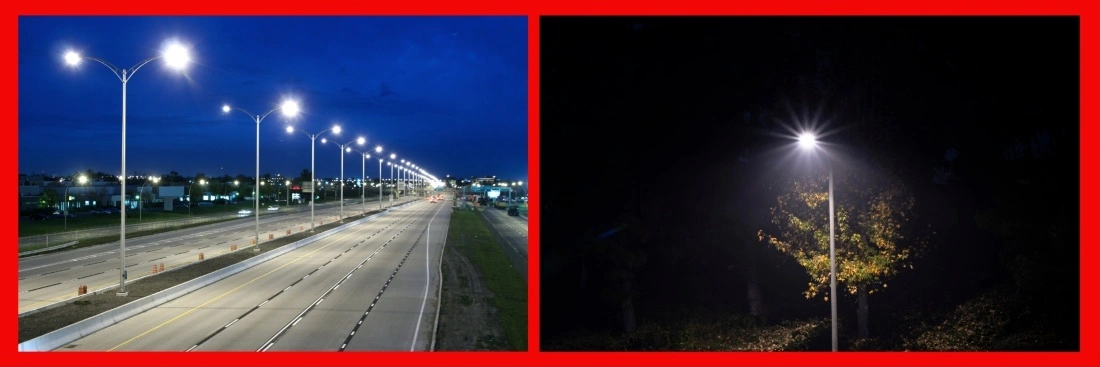
Highway applications often use higher mounting heights and fixtures exceeding 25,000 lumens, depending on lane count and pole spacing. Optics are designed to project light farther down the roadway rather than directly below the pole. Proper distribution ensures lanes are evenly lit without creating bright patches or dark zones between fixtures.
Pedestrian paths and bike lanes
Pedestrian and bike paths operate at a human scale. Lighting here supports visibility, safety, and comfort rather than traffic flow. Lower mounting heights and narrower distributions are commonly used to keep light focused on the path itself.
LED street lights for these applications typically use lower lumen outputs with Type I or Type II distributions. Even coverage is more important than brightness. Glare control is essential, especially in shared spaces where pedestrians and cyclists move at slower speeds and are more sensitive to harsh light.

Choosing the Right Specs for Different Street Applications
Residential streets
Lower lumen output, tighter distributions, and reduced glare are key. Comfort and visibility matter more than maximum brightness.
Commercial roads and parking areas
Higher lumens and wider coverage help handle traffic volume and pedestrian activity while maintaining clear sightlines.
Highways and major thoroughfares
High lumen output paired with forward-throw optics improves visibility at speed and reduces sudden brightness changes.
Pedestrian paths and bike lanes
Even coverage at lower mounting heights keeps paths safe without spilling light into surrounding areas.
Conclusion
Selecting LED street lights based on clear specifications leads to safer roads, lower energy use, and fewer long-term issues. Lumens define brightness, wattage controls power use, and coverage determines how well light reaches its target. When these elements are matched correctly, an LED street light performs exactly as intended and continues to do so for years.
About the Author: About James Crowley on X.
About us: See our About us page for more about RuggedGrade
